Grease in the kitchen line.
It goes down warm and sets on the pipe wall like candle wax, narrowing the line until one plate of drippings closes it.
Drain cleaning starts with which fixtures are slow. That single answer tells a plumber whether the trouble is under your sink or under your yard.
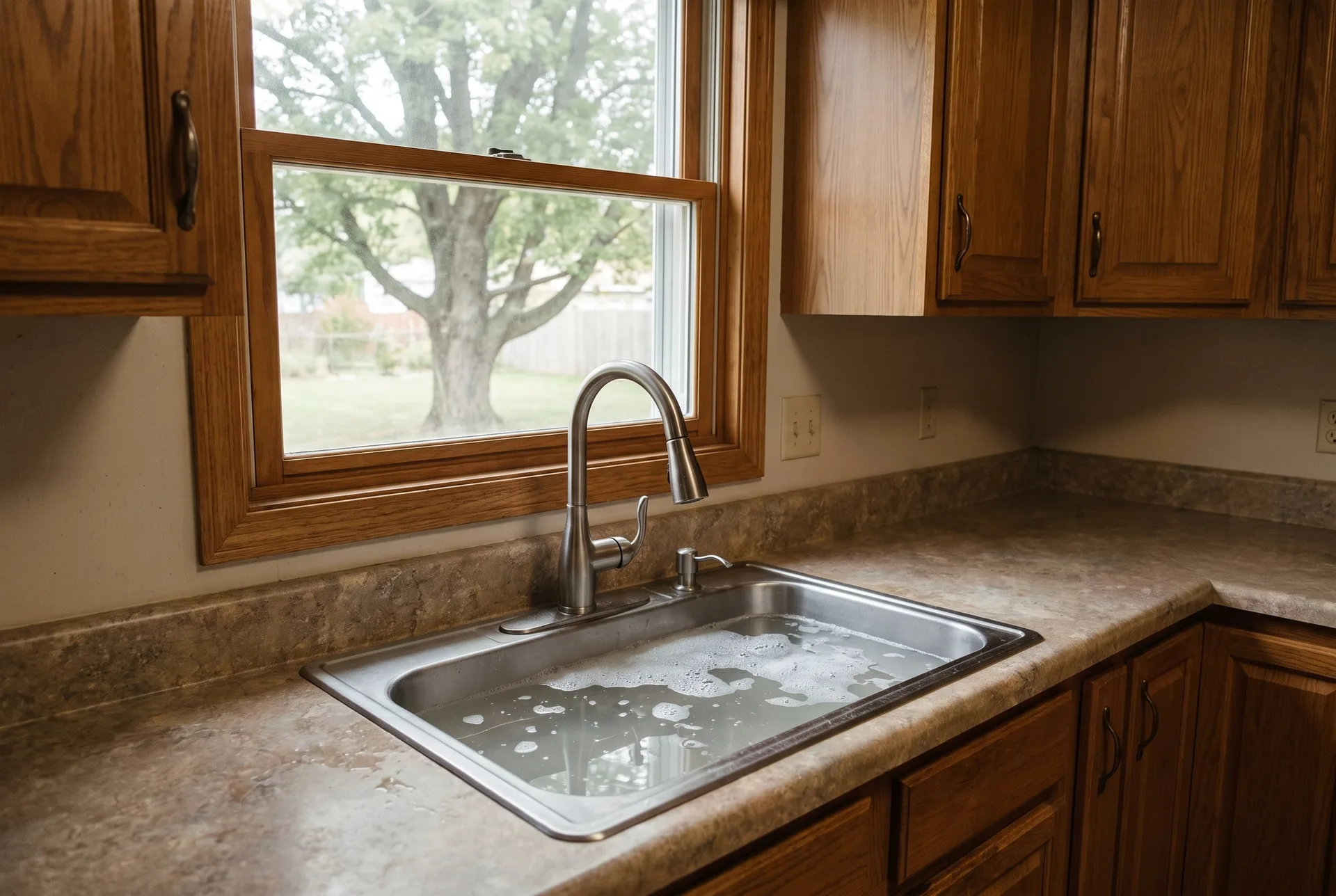
The blockage sits in that fixture's own trap or branch. A kitchen sink that drains while the bathroom is fine is a kitchen problem, and it is the cheap one.
You are past the fixture and into the branch that joins them. Often a shared bathroom line, sometimes a blocked vent.
Stop using water. This points at the main line leaving the house, and every gallon has to come out somewhere. Usually the basement floor drain. Read sewer line repair next.
Rain should not reach your sanitary drain at all here. When it does, something is cross connected or broken open underground. A camera job, not a rodding job.
It goes down warm and sets on the pipe wall like candle wax, narrowing the line until one plate of drippings closes it.
Soap scum binds hair into a mat at the stopper or the trap. The one you can often clear yourself.
Roots follow moisture into any crack and grow into a mesh that catches paper. A sag holds waste in the low spot. Either one clears with rodding and then returns on a schedule.
No dishwasher, no washer, no long shower. If the main line is blocked, the washer emptying puts water on the basement floor.
It rarely reaches a real blockage, it sits in the trap, and it makes the pipe a burn risk for whoever opens it. If you already poured some in, say so.
Fill the basin enough to cover the cup, block the overflow with a wet cloth, and use steady strokes rather than hard ones. If two tries do not shift it, stop.
A capped fitting in the basement floor or outside the foundation. Do not open it. A photo saves the plumber a search.
A cable with a cutting head, driven down the line by machine. It punches through the blockage and cuts roots, and it is the usual first move. It does not clean the pipe wall, so grease and scale start rebuilding as soon as it leaves.
High pressure water through a nozzle that scours the pipe back to full bore. The right answer for a grease-packed kitchen line or years of sludge in cast iron, and it lasts far longer than rodding. It costs more, and it is not for a cracked pipe.
A camera on a push rod, with a locator that marks the fault's depth and position in your yard. The only way to know whether you have a blockage or a broken pipe. Worth paying for when the same drain backs up two or three times a year.
Where the cleanout is, and whether there is one at all. Whether the plumber can work from a floor cleanout or has to pull a toilet. The length of the run to the street. Whether roots mean a second visit with a bigger machine.
It asks residents with a basement backup to contact Public Works first, to work out whether the fault is in the village main or the homeowner's line. That call can save you a bill. Source for In Gurnee, call the village before you call a plumber
Highland Park counts about 10,000 private sewer laterals, owned by the property owner. Deerfield puts it in its code and gives an owner 7 days to repair after notice. Source for The line under your yard is yours
The North Shore Water Reclamation District, which treats sewage for Waukegan, Gurnee, Highland Park, and Lake Forest, states there are no combined sewers in its area. A backup that only happens in a storm is a fault on your side. Source for Rain should never reach your sanitary drain
Highland Park's median home was built in 1962 and Waukegan's in 1967, about fifteen years older than the county as a whole. Homes of that age commonly have cast iron inside and clay tile outside, which is general plumbing knowledge, not a village record. Source for Old towns, old drain pipe
Each town page names who treats the sewage there and who to call first.
It can, and it often does not reach the blockage anyway. Repeated use eats at old metal pipe and rubber seals, and it leaves a caustic pool somebody must deal with before opening the trap.
Because the fault is past the point where they join, in the main line leaving the house. Roots, a collapse, a sag, or a blockage at the street are the usual causes. Get a camera down it before buying any repair.
Illinois licenses plumbers by law, and villages here ask for a licensed plumber on a permit. A narrow exemption covers an owner working on the home they live in. Clearing your own sink trap is fine. The line under the street is not. Look up any plumber on the state's license verification page.
A blockage that returns on a schedule is rarely a blockage problem. It is roots growing back, or a low spot collecting waste. Rodding treats the symptom. A camera finds the cause.
Two or three lines is enough. These decide what the plumber brings.
North Shore Plumbing connects Lake County homeowners with a licensed local plumber. We are not a plumbing contractor.
Tell us which fixtures are slow and which town you are in. A person reads every request. If we cannot place yours with a licensed plumber who covers your town, we tell you. See how it works.