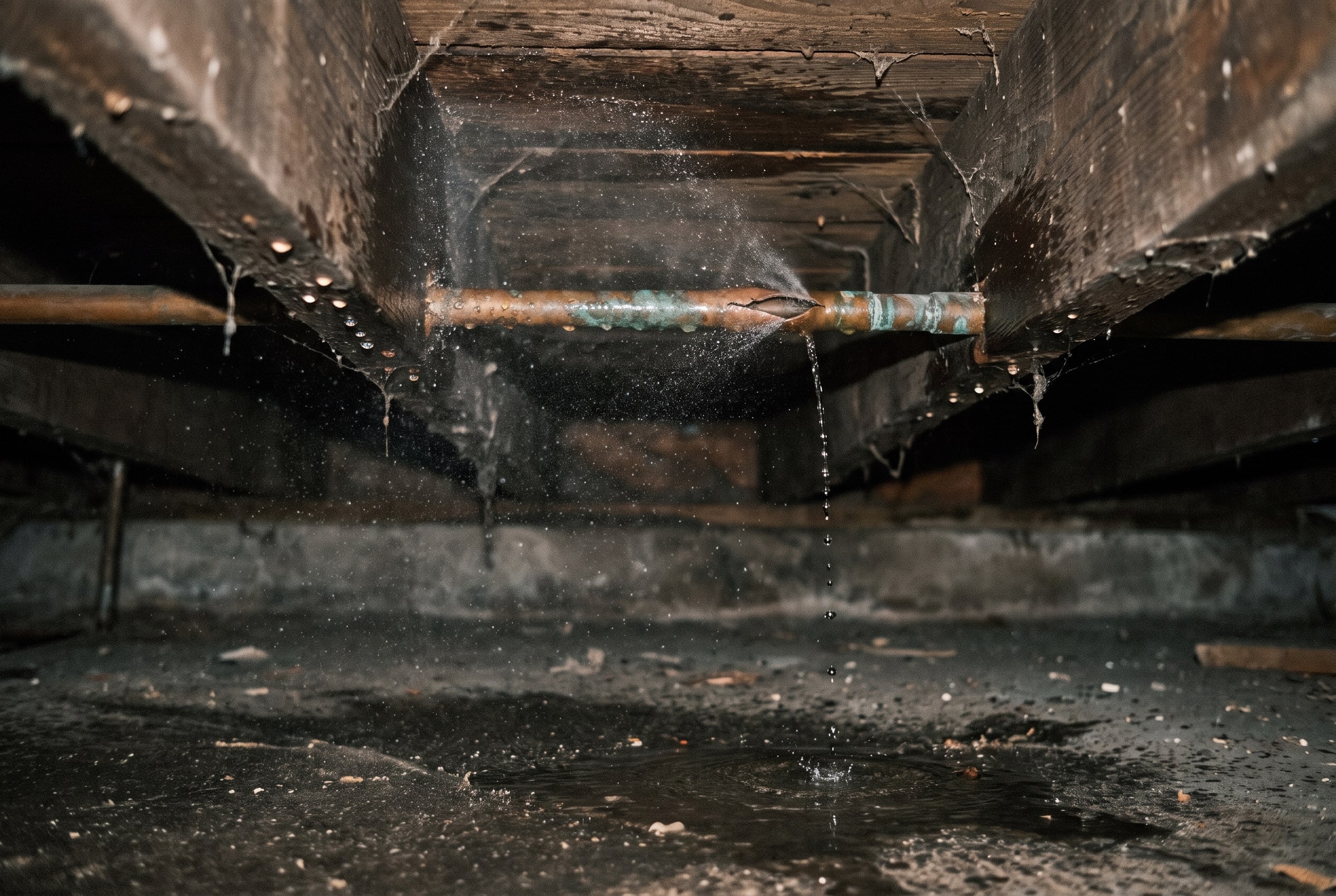
How to Prevent Frozen Pipes in a Lake County Winter
To prevent frozen pipes, keep heat on the pipes in cold parts of the house and keep water moving through them when it gets very cold. That means draining the hose bibs in the fall, insulating pipes in crawl spaces and garages, sealing the drafts that blow onto them, and running a trickle during a hard freeze.
Why Lake County pipes freeze
Cold here is not rare. At Waukegan Regional Airport, the nearest official weather station in the county, the normal January low is about 15.5 degrees Fahrenheit, with a low at or below freezing on roughly 133 days a year and below zero on about 6. January 2026 averaged a 14.9 degree low, 4 degrees below normal.
The buried line into your house is not the problem. The Illinois Plumbing Code requires a water service pipe to be at least 36 inches deep, or as deep as the local maximum frost penetration if that is deeper. Frost in an average Illinois winter reaches about 10 to 20 inches, and a severe winter can drive it to around 30 inches in far northern Illinois, which includes Lake County. So the pipes that freeze are inside the house, in spaces the furnace never heats.
Which pipes freeze first
- Outdoor hose bibs and the pipe feeding them. The most common freeze, and the one that floods a basement when the split is inside the wall.
- Pipes in unheated crawl spaces, often with a vent blowing outside air across them.
- Pipes in an attached garage, especially a laundry line or utility sink.
- Supply lines inside exterior walls, particularly a kitchen line on a north or west wall.
- Pipes in an unheated basement, or anything past an open rim joist or broken window.
Older housing carries more of this risk. Waukegan's median home was built in 1967, and almost one in five date from 1939 or earlier. Highland Park's median is 1962. See plumbers in Waukegan and plumbers in Highland Park.
Before the first hard freeze
- Disconnect every garden hose. A frost free hose bib only drains if the hose is off. Leave it attached and the valve holds water in the exact spot that splits.
- Drain the hose bib supply if there is an interior shutoff. Close it, then open the outside spigot.
- Insulate the pipes you can reach in crawl spaces, garages, and unheated basements. Foam sleeves are enough for most runs.
- Seal the drafts, not only the pipe. Air leaking through the rim joist does more damage than temperature alone, so caulk and foam beat insulation.
- Check the crawl space vents. Many are meant to be closed for winter.
- If you travel, leave the heat on at 55 degrees or higher.
- Clear a drain that has been running slow. Standing water in a cold space can freeze, and fall drain cleaning beats a frozen line in January.
During a cold snap
- Open the cabinet doors under sinks on exterior walls so room air reaches the pipes. Move cleaning products out of reach of children and pets.
- Run a trickle from the fixture farthest from where water enters the house. Moving water is harder to freeze, and an open faucet gives expanding ice somewhere to push.
- Keep the garage door shut if there is plumbing on a garage wall, and leave interior doors open.
- Do not turn the heat down at night during the coldest stretch.
How to thaw a frozen pipe safely
You usually find out when one faucet gives nothing while the rest of the house is fine. The frozen section sits between the meter and that fixture.
What to do
- Open the faucet that pipe feeds. Water and steam need somewhere to go as the ice releases.
- Start at the faucet end and work back. Thawing from the middle can trap meltwater between two ice plugs.
- Use gentle, steady heat. A hair dryer, warm towels re-soaked as they cool, a heating pad, or a space heater kept well clear and never unattended.
- Keep the heat on it until the flow is full, then check the run for weeping joints or a bulge. A split often does not show until pressure returns.
If you cannot find it, if it is inside a finished wall, or if a pipe has split, call an emergency plumber.
What never to do
- Never use an open flame. Torches on frozen pipes are a known cause of house fires, and the heat can boil water inside the pipe and burst it out of sight.
- No charcoal or kerosene heaters indoors. Carbon monoxide.
- Do not leave a space heater unattended or near anything that can catch.
Find your main shut-off now
The worst time to learn where the main shut-off is, is while water comes through a ceiling. In most Lake County basements it is on the wall facing the street, near where the meter enters the foundation, usually a colored handle or a round wheel. On a slab or crawl space, look in a utility closet, on a garage wall, or near the water heater.
Turn it fully off and back on. A valve untouched for twenty years can seize, and learning that now is better than later. If it will not budge, do not force it. Tag it so anyone can find it in the dark.
If a pipe bursts
- Shut the main off, then open faucets upstairs and down to drain the lines.
- Shut down the water heater, gas to pilot or off, or the breaker on an electric one, so it does not fire on an empty tank.
- Stay out of standing water near electricity. If water is near a panel, outlets, or the furnace, do not wade in. Cut power at the breaker only if the panel is dry and reachable. Otherwise leave and call your utility.
- If you smell gas, leave first. Get everyone out, then call 911 or your gas utility, Nicor Gas or North Shore Gas depending on your town, from outside.
- Photograph everything before you clean up. Insurers ask, and wet drywall dries and hides it.
- Then call a plumber. A burst supply line does not wait until Monday.
What this site does
North Shore Plumbing is not the plumbing contractor. You describe what happened once, a person reads every request, and it goes to a plumber licensed in Illinois who covers your town. They quote the job and schedule it with you directly. We cannot promise how fast a plumber can reach you, and if we cannot place your request with a licensed plumber who covers your town, we tell you. For anything urgent, do not wait on us. Call a local licensed plumber directly.
Send a request and tell us where the water is and whether it is still running.
Questions people ask
At what temperature do pipes freeze?
There is no single number, because what matters is how cold the pipe gets and for how long, not the reading outside. Trouble starts when outdoor temperatures sit in the teens or lower for hours. A well insulated pipe indoors can sit through that, while an exposed pipe in a drafty crawl space can freeze sooner with wind across it.
Should I leave a faucet dripping all winter?
No. Run the trickle during a hard freeze, not the whole season. Constant dripping wastes water and does nothing on an ordinary January night. Reach for it when a cold snap is forecast, when you are away, or on a run that has frozen before.
Will my pipes freeze if the heat goes out?
They can. How fast depends on the house, the temperature, and how long the power is out. If the heat is out and it is very cold, shut the main off and drain the system at the lowest faucets. An empty pipe cannot burst.
