Tankless vs. Tank Water Heater for a Lake County Home
A tank water heater stores hot water and runs out, and a tankless one heats water as it flows and does not. For a Lake County home the choice turns on three things: how many fixtures run at once, what a retrofit would change in your gas and venting, and whether you will descale on schedule.
How each one works
A tank heater
A tank holds 40, 50, or more gallons at a set temperature and reheats as you draw it off. Its first hour rating is how much it delivers in the first hour from full. Its recovery rate is how many gallons per hour it reheats after that. A tank is generous until empty, then slow.
A tankless heater
A tankless unit has no storage. Open a hot faucet and water flows through a heat exchanger while a burner or element raises its temperature on the way. It is rated in gallons per minute at a given temperature rise. So it never runs out, but has a ceiling on how much it can heat at once.
Flow rate versus recovery
- A tank runs out, then recovers slowly. Three showers back to back on a 40 gallon tank means the third gets cold, and it takes time before there is hot water.
- A tankless unit never runs out but can be outrun. Two showers plus a dishwasher can exceed its gallons per minute. It goes lukewarm rather than cold, because it is trying to heat more water than it can raise to temperature.
So the question is which failure mode fits your house: running out, or being outrun.
What a tankless retrofit can change
Gas line and meter. A gas tankless unit fires at a much higher input than the tank it replaces, because it heats water instantly. The existing line is often sized for the old load, so it may need upsizing, and house demand checked against the meter. Often this is the largest part of the job.
Venting and condensate. Most tank heaters vent through a metal flue into a chimney. Most modern tankless units are condensing appliances needing their own sealed venting, stainless steel or approved plastic, run to a new exterior penetration. They also make acidic condensate needing a drain and often a neutralizer.
Electrical. A gas tankless unit still needs power for its controls and fan, so a missing outlet adds a trade.
Hard water and descaling
Scale forms when heated water leaves its calcium and magnesium behind. In a tank it falls to the bottom. In a tankless unit it builds inside narrow heat exchanger passages, which is worse, because that is where the heating happens.
County water is moderately hard rather than extreme. The City of Lake Forest publishes its own figure at 7.5 grains per gallon, or 130 mg/L of calcium carbonate. See plumbers in Lake Forest. The Central Lake County Joint Action Water Agency, which supplies treated Lake Michigan water across much of the county, puts its hardness at about 8 grains per gallon.
Groundwater can be harder. Lake Zurich is still on deep wells, and the Village's own numbers put raw well water at 14 to 18 grains per gallon before ion exchange treatment installed between 2003 and 2009 brought it to 6 to 8 grains. See plumbers in Lake Zurich.
- Descaling is maintenance, not an extra. Intervals vary by brand and by water hardness, and some makers tie warranty to it.
- Ask for isolation valves at installation. They make descaling straightforward. Without them it is a bigger job.
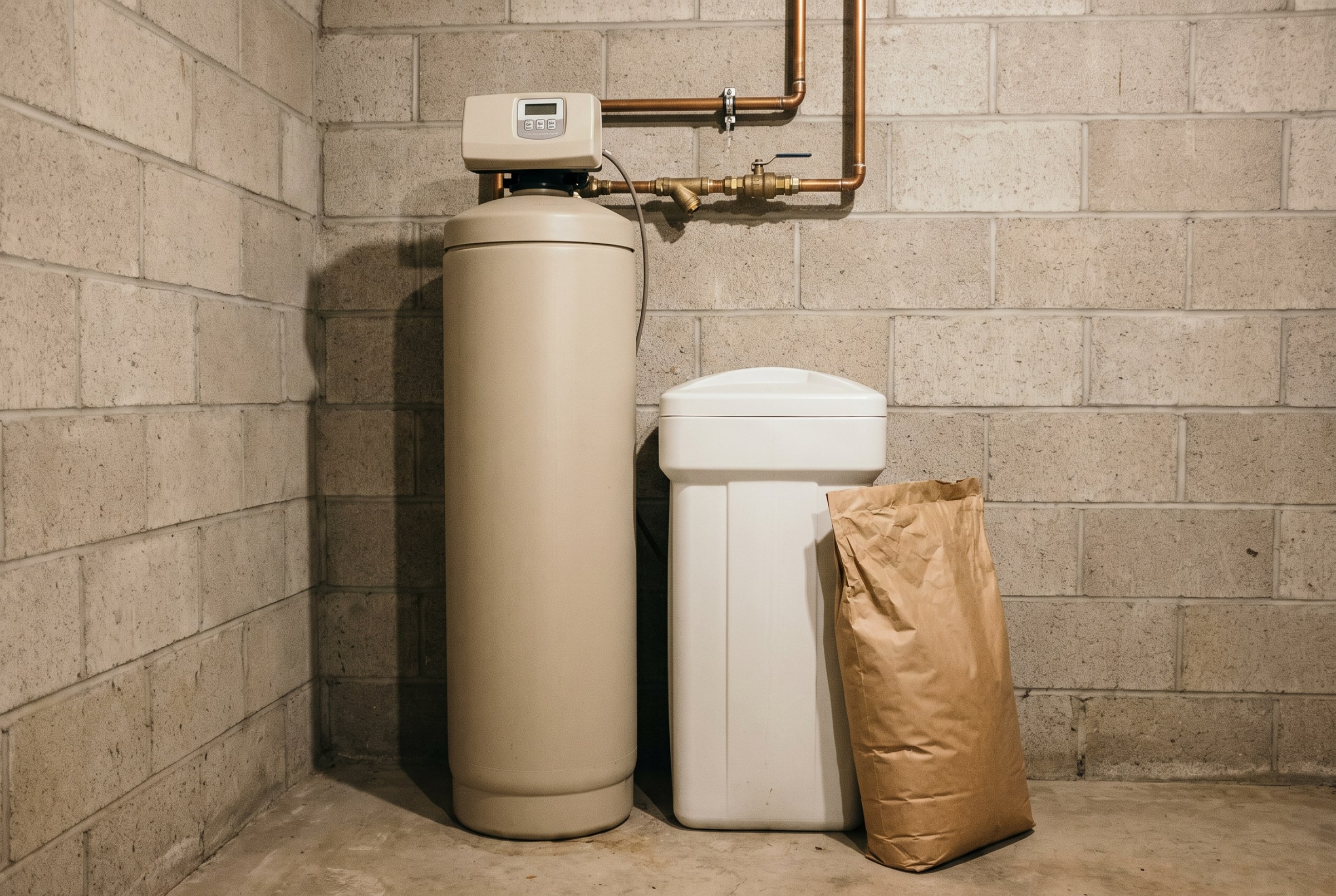
- A softener cuts both ways. Less scale, but CLCJAWA warns that softened water is more corrosive and has been implicated in higher lead and copper levels, and says most residents on its lake water stop using softeners. See water softener installation.
Cold inlet water in a northern Illinois winter
A tankless rating is always a flow rate at a temperature rise, and the second half changes with the seasons.
In summer the water arriving is relatively warm, so the unit adds only a little heat to reach shower temperature and moves plenty of gallons per minute. In January the incoming water is far colder, so the same unit adds many more degrees to every gallon. It cannot make more heat than its burner produces, so the gallons per minute at a usable temperature falls. That is why a unit that felt generous in August can feel thin in January.
The answer is sizing. Ask the plumber to size it for winter inlet water and for the fixtures you actually run at once, not a summer rating on a brochure. An undersized unit is the most common complaint about tankless here, and that is a sizing mistake.
Space and lifespan
A tankless unit hangs on the wall and gives back the floor the tank stood on.
- Tank: roughly 8 to 12 years. The steel tank is the part that fails, and once it leaks the unit is finished.
- Tankless: often 20 years or more. No tank to rust through, and the heat exchanger is serviceable. That assumes the descaling happened.
A tankless unit also has more repairable parts. Flow sensors, igniters, fans, and control boards are replaceable, unlike a tank whose failure is terminal. Either way it is the same water heater repair work.
Who each one suits
A tank usually fits better when the venting, gas line, and location all work, when demand is moderate, or when a new vent penetration would be awkward.
A tankless unit usually fits better when you run out of hot water regularly and the tank is already as large as the space allows, when you want the floor space back, or when you will stay long enough for the longer life to matter.
Look hard before choosing tankless when the gas line needs real work, the chimney is the only vent route, or nobody will keep up the maintenance.
What this site does
North Shore Plumbing is not the plumbing contractor. You describe what you have and want, a person reads every request, and it goes to a plumber licensed in Illinois who covers your town. They look at your gas line, venting, and water, then quote and schedule the job. We cannot promise how fast a plumber can reach you, and if we cannot place your request with a licensed plumber who covers your town, we tell you. For anything urgent, do not wait on us. Call a local licensed plumber directly.
If you smell gas at any point, leave the house first, then call 911 or your gas utility, Nicor Gas or North Shore Gas depending on your town.
Send a request with your town and what you have now.
Questions people ask
Does a tankless water heater really never run out of hot water?
It will not run out the way a tank does, because nothing is stored to empty. It can still be outrun. Open more fixtures than its flow rate covers and the water goes lukewarm until demand drops. Size it for the fixtures you use at once.
Do I need a water softener with a tankless water heater?
Not automatically. Water across most of Lake County is moderately hard rather than extreme, and CLCJAWA advises that most residents on its lake water stop using softeners. What a tankless unit needs is descaling at the maker's interval and valves that make it practical. On well water, test first.
Is a tankless water heater worth it in a cold climate?
It works in a cold climate, but it has to be sized for one. The colder the incoming water, the more heat the unit adds to every gallon, so the flow rate it delivers at shower temperature drops in winter. A unit sized on a summer rating disappoints in January.
